Medicine - Health
Create mini kidneys from stem cells
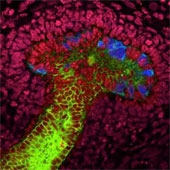
According to Nature Cell Biology, the scientists used mouse embryonic stem cells to induce human stem cells to become urinary state - the initial form of human kidneys.
Browse ScienceInfo articles and explainers related to Stem Cell.
281 published items.
According to Nature Cell Biology, the scientists used mouse embryonic stem cells to induce human stem cells to become urinary state - the initial form of human kidneys.

Scientists have discovered how to freeze adult skin cells so they don't age, helping us stay young.
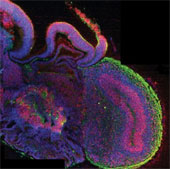
Scientists have used stem cells extracted from the skin to develop 3D tissue that mimics a human brain. The breakthrough is expected to help treat neurological diseases…

Can stem cells be harvested to treat a day by simply asking patients to provide a urine sample?
Rakesh Jain, a Massachusetts General Hospital doctor in the United States, and colleagues transplant stem cells to the brain surface of mice.
The British Medical Research Council (MRC) announced on July 21 that scientists in the country have succeeded in recovering sight for blind mice. This is considered a ne…
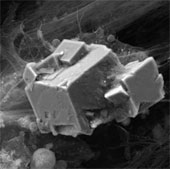
The scientific group in Granada, Spain has invented a new biological material from umbilical cord cells with the help of carbon fiber that acts as a skeleton, helping to…
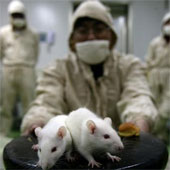
After an initial successful test in mice, Chinese scientists believe that stem cells derived from urine can help humans re-grow lost teeth.
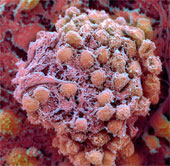
US scientists have recently reported making human embryonic stem cells from skin cells using cloning techniques.
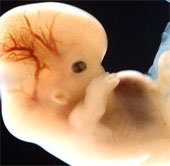
Shoukhrat Mitalipov, a researcher at Oregon Health and Science University in the US, and colleagues have used cloning techniques to create human embryos, the BBC reporte…
Mexico City's capital city of Mexico is focusing its resources on the early establishment of a stem cell bank for medical treatment, first of all, the diseases of bone,…
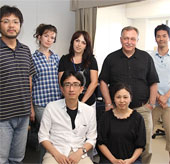
The group of Japanese geneticists headed by a Russian scientist, Konstantin Agladze, for the first time cultivated a living human heart from stem cells. The work was car…
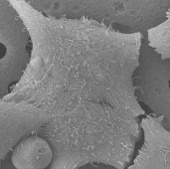
Researchers at the Institute of Biotechnology and Nanotechnology (IBN) have successfully created human kidney cells from human embryonic stem cells in vitro (biological…
British doctors nursed stem cells onto the patient's arm, thereby growing a new nose. By the time the shape was complete, full of nerves and blood vessels, they were tra…

According to Washington newspaper, on February 1, scientists at Monash University are getting closer to cultivating eye parts in the laboratory, opening a new way to tre…